
Water & Moisture in Your Cat's Diet

Updated: 5 days ago
An important thing to think about when feeding cats isn't just what nutrients are in their food- it's how much water is in it.
Cats are not always enthusiastic water drinkers. In the wild, much of the water a cat consumes comes from its prey, so I prefer to provide a significant amount of moisture through food rather than relying on a cat to make up the difference at the water bowl.
This is one of the reasons I strongly prefer raw or wet food over dry food.
My own cats eat a moisture-rich raw diet, and honestly, they really don't drink as much water alone as you might expect. They don't need to drink much because so much of their daily water intake is already coming from their food. That is exactly what I want!

Food Is a Water Source
When we think about hydration, it's easy to think only about the water bowl, but water in food counts, too.
Raw meat and wet food contain a significant amount of moisture, whereas dry food has had most of its water removed during processing. A cat eating a moisture-rich diet therefore doesn't have to rely nearly as much on drinking water to get the water its body needs.
This is one of the biggest reasons I don't consider a bowl of water to be a substitute for feeding a moisture-rich diet.
Drinking water is important. But getting water through food is important, too.
If your cat eats wet or raw food and rarely visits the water bowl, that isn't necessarily a problem. In fact, it may simply mean they're getting much of their water from their meals.
Male Cats and Their Need for Water
Urinary health is something I think is especially important to understand when you have a male cat.
Male cats have a narrower urethra than females, which means that a urinary blockage can become a serious, life threatening emergency. Urinary crystals, stones, inflammation, mucus, or other material can obstruct the urethra and prevent a cat from urinating normally.
A male cat who is unable to urinate needs immediate veterinary attention.
This isn't something to watch overnight and see if it improves- it honestly can be too late very quickly.
Signs that something may be wrong with your cat's urinary tract can include repeated trips to the litter box, straining to urinate, producing only tiny amounts of urine, crying or appearing painful while urinating, blood in the urine, excessive licking of the genital area, or suddenly urinating outside the litter box.
A blocked cat may become increasingly distressed, lethargic, vomit, or stop eating as the condition progresses.
If you ever suspect a urinary blockage, treat it as an emergency.
Does More Water Prevent Urinary Crystals?
This is where things can get oversimplified.
Increasing water intake can help produce more dilute urine and can be an important part of managing some urinary conditions. But urinary crystals and urinary disease are not caused by simply "not drinking enough water," and water alone isn't a guarantee that a cat won't develop a urinary problem.
There are different types of crystals and stones, and urinary problems can have multiple contributing factors.
So I don't want anyone to read this and think:
My cat has a fountain, therefore my cat can't get crystals.
That's not how it works, so we must be careful not to oversimplify. What I do want pet parents to think about is the overall moisture content of your cat's diet and whether your cat has reliable access to fresh water.
For a male cat especially, I would much rather see a cat eating a moisture-rich diet and having good access to water than eating a dry diet and barely drinking.
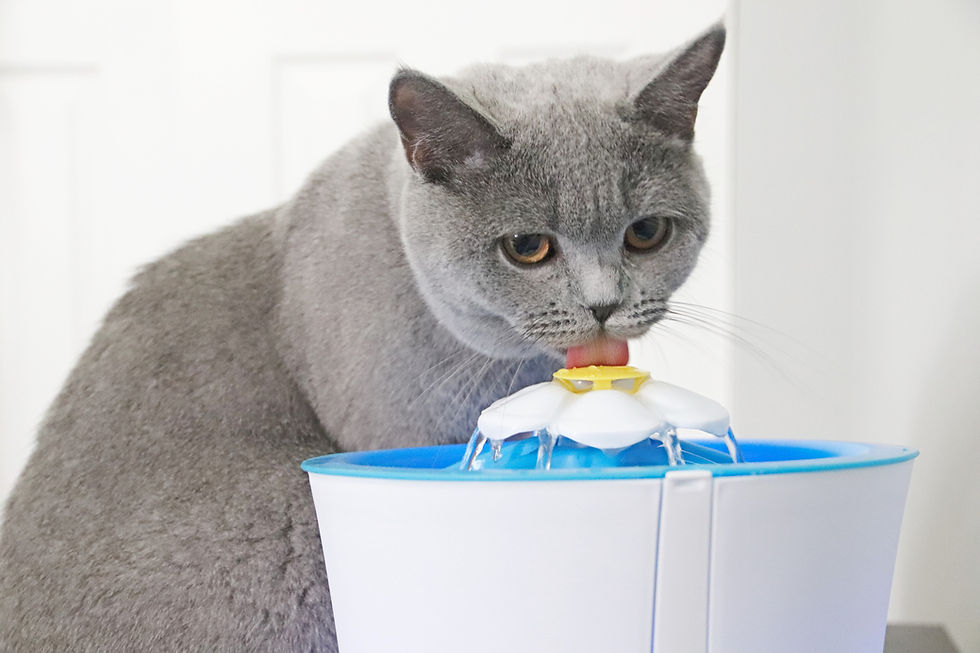
Water Fountains
A fountain can be a great option for some cats.
Some cats are attracted to moving water and will drink more from a fountain than they will from a traditional bowl. If your cat likes one, wonderful. There is nothing wrong with using it. But I also don't think every cat needs a fountain.
And there is one thing I would put ahead of having fancy moving water: Clean water.
A fountain that isn't cleaned regularly can become pretty disgusting. Food particles, saliva, dust, hair, and biofilm can accumulate in the fountain and its various little parts. A fountain isn't automatically more sanitary just because the water is moving.
If you use one, clean it regularly and follow the manufacturer's recommendations for replacing filters and cleaning the pump.
Still Water Bowls
In our own cattery, we prefer still water bowls.
That may sound strange when fountains are often marketed as the superior choice for cats, but our priority is sanitation and ease of cleaning.
A simple stainless steel or glass bowl is easy to see into, easy to wash thoroughly, and doesn't have a pump, filter, tubing, or little crevices where buildup can hide- plus you can have an extra and throw the dirty one in the dishwasher every/every other day!
And because our cats eat a moisture-rich raw diet, we aren't depending on the water bowls to provide the majority of their daily hydration anyway.
Our cats drink very little from their bowls and this is not a problem.
They're getting a lot of moisture through their food, and we still provide clean drinking water at all times.
If your cat eats a dry diet, however, I would be much more interested in how much they're drinking because they're relying much more heavily on drinking water for their total water intake.
Water Quality Matters
I also think it's worth paying attention to the quality of the water you're offering your cat, not just whether a bowl is available. In our home, we use a high quality under-sink water filter, and all of our cats have access to that filtered water. I prefer this to relying on bottled water, both because it is convenient and because bottled water can involve plastic packaging and isn't necessarily better quality than the water coming from a good filtration system.
Reverse osmosis (RO) water can also be appropriate for cats, although I don't think it is necessary for every household with safe municipal or well water. RO removes a very large portion of dissolved minerals and contaminants, so if you use it as your cat's primary drinking water, I'd want the overall diet to be appropriately complete and balanced rather than worrying about trying to “add minerals back” to the water itself. For most households, my approach is simply: provide clean, good-quality water that you are comfortable drinking yourself, and keep it fresh.
You Don't Need to Force Your Cat to Drink
If you've ever worried because you've never actually seen your cat drink, don't panic immediately.
Look at the whole picture.
What are they eating?
How much moisture does that food contain?
Are they urinating normally?
Are they acting normally?
Are they eating and maintaining a healthy body condition?
A cat eating a moisture-rich raw or wet diet may simply have less reason to visit the water bowl frequently.
You can also make water more appealing by offering multiple clean bowls in different locations, trying different bowl materials, or experimenting with a fountain if your cat seems interested in moving water.
But I wouldn't turn drinking water into a battle. The easiest water for a cat to consume is often the water already present in their food.
Should You Add Water to Your Cat's Food?

You can! Some cats happily eat food with additional water mixed into it, while others will look at you like you've committed a personal offense.
If your cat accepts it, adding a little water to wet food or raw food can be an easy way to increase moisture intake, but your cat won't appreciate it if you turn their food into a soup either. A tablespoon or two can go a long way.
If your cat is already eating a moisture-rich diet, they're already getting a substantial amount of water through their food and you probably don't need to be as concerned.
For freeze-dried raw, adding water is particularly important because the freeze-drying process removes the food's natural moisture. Follow the manufacturer's instructions for rehydration and feeding.
Simple Starting Point
If I were setting up a feeding routine for a cat from scratch, I'd keep it pretty simple:
1. Feed a moisture-rich diet.
Raw or wet food provides substantially more moisture than dry food.
2. Always provide fresh drinking water.
Even cats eating raw or wet food should have access to water whenever they want it.
3. Use bowls that are easy to keep clean.
I prefer simple stainless steel or glass bowls because they're easy to wash thoroughly.
4. Offer multiple water sources if your cat likes them.
Put bowls in convenient, quiet locations. If your cat prefers a fountain, use one.
5. If you use a fountain, clean it.
Moving water isn't a replacement for cleaning.
6. Pay attention to urinary habits.
Especially with male cats, don't ignore changes in urination.
7. Don't obsess over how often you see your cat drink.
Look at their total moisture intake, including the water they're getting from their food.
Final Thoughts
Hydration is one piece of keeping your cat healthy. If your cat develops urinary symptoms, don't try to fix the problem by simply putting out another water bowl.
And if your cat is repeatedly having urinary issues, talk with your veterinarian about what is actually happening. Depending on the problem, your cat may need a urinalysis, dietary changes, medication, or other treatment.
But as a general feeding philosophy, I think it's worth making moisture a normal part of the conversation about cat nutrition, rather than treating water as something cats will simply drink enough of on their own.
Feed moisture. Provide fresh water. Keep the water sources clean. And know your cat's normal bathroom habits.
That's a much more useful approach than simply asking whether your cat is drinking enough.
Disclaimer: This information is for educational purposes only and is not veterinary or nutritional advice; you are responsible for decisions regarding your cat's diet and care.

Comments